.png)
Seattle SEA Beacons Are More Than Simple World Cup Decorations
Written by Danielle Bae
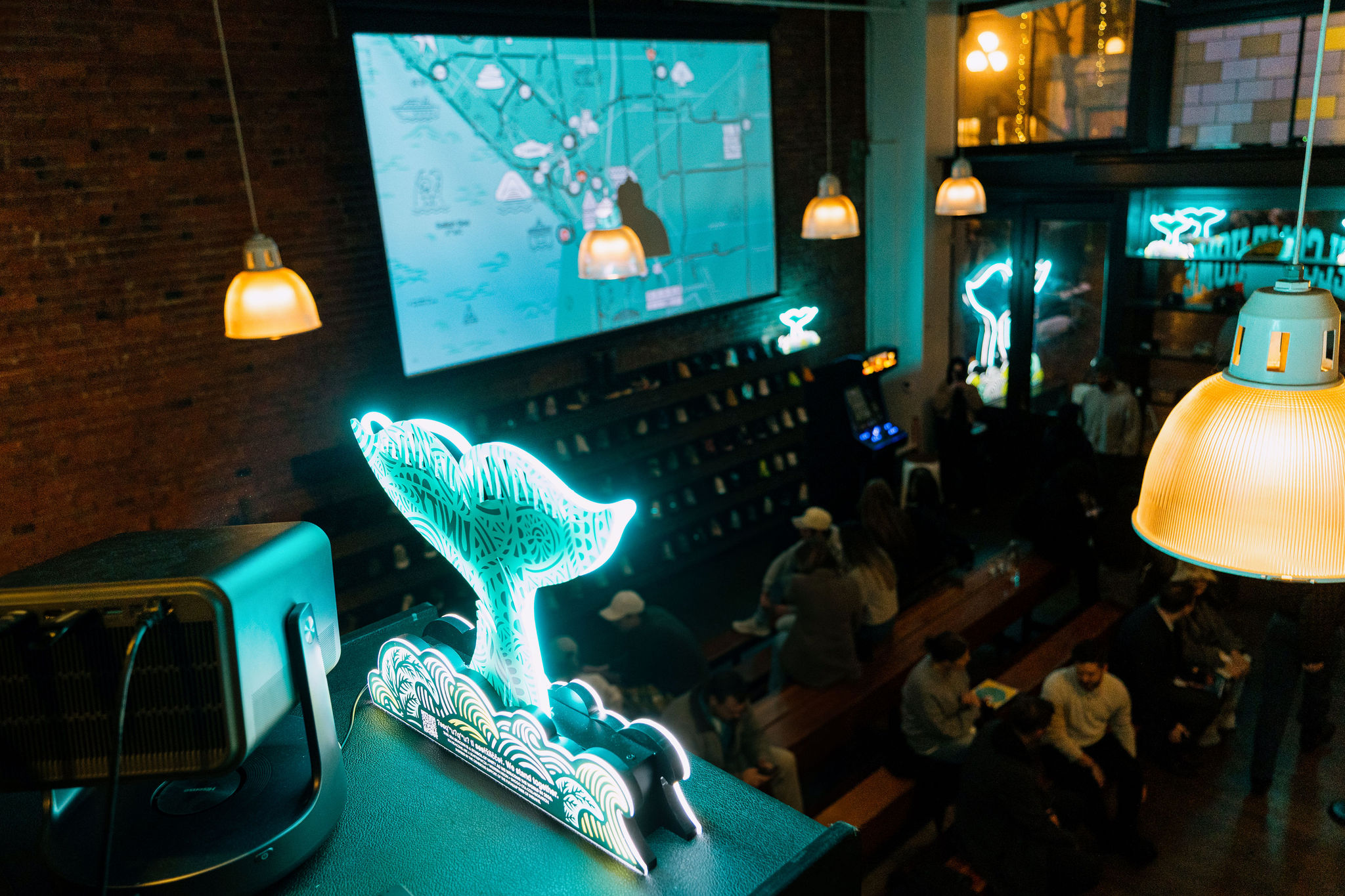
When the FIFA World Cup came to Seattle this summer, the city wanted to share the limelight. It didn’t cover its streets with FIFA logos and instead installed handmade neon signs that were placed all over downtown; the glowing whale tails, if you ended up following them, can lead you from the waterfront all the way through Seattle’s most beloved neighborhoods.
These are the SEA Beacons, and according to Leo Flor, Chief Legacy Officer for the Seattle FIFA World Cup 26™ Local Organizing Committee, they were never meant to be just decorations. They were meant to be a symbol that would outlast the tournament entirely.
“Rather than covering the city in FIFA logos, where it would be about FIFA coming here, we were trying to find a way to stay connected to the tournament but really make it much more about what we think makes our city distinct or special,” Flor said in an interview.
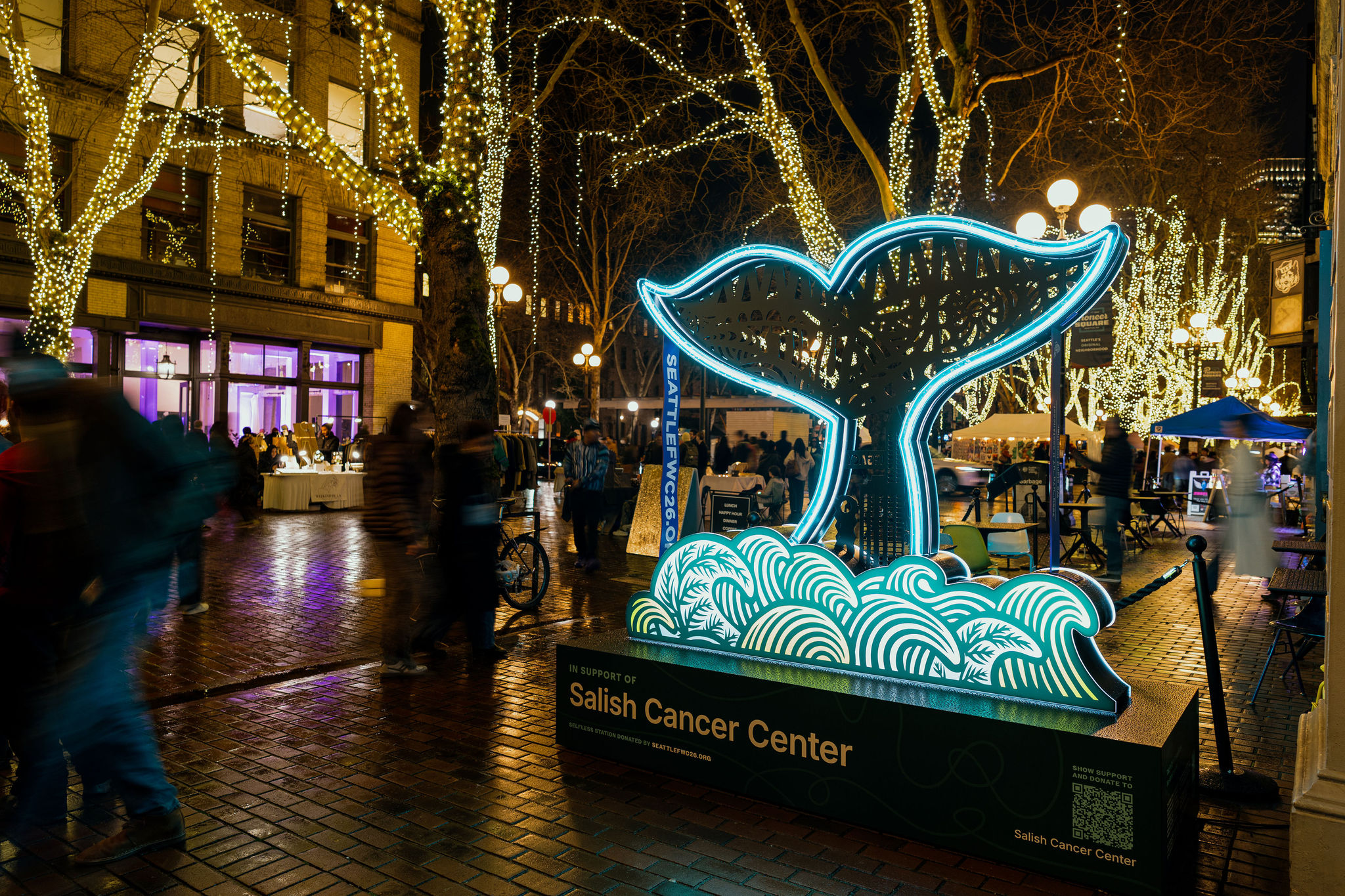
Produced by the SoDo-based sign company Western Neon, each SEA Beacon is a roughly 15-by-15-inch neon sign based on the central image of Seattle’s official FIFA city poster, designed by Seattle artist Shogo Ota. The whale tail image, which serves as a reference to the orcas that are widely known in the Pacific Northwest, was made after a consultation with local Indigenous tribes, incorporating the heritage of Coast Salish and Puyallup Tribe people. The wave details in the design embodies a cedar branch motif, adding even more meaning into what might otherwise just look like a simple decorative piece.
More than 350 beacons were donated to small businesses and cultural institutions across Seattle. All of this was possible due to the hundreds of thousands of dollars that the organizing committee raised from its donors and supporters in order to purchase the beacons as works of art instead of advertising, using them as a way to support and show appreciation towards the local businesses. Recipients were required to pledge that they would one, keep the beacons up after the World Cup ended, and two, that they would not sell them.
“They are art and not advertising,” Flor said. “They’re handmade in Seattle, and it was a substantial investment [from] donors and supporters.”
Western Neon spent nearly a year producing not only the smaller beacons but also the 26 larger “Selfless Station” sculptures, which are the same whale tails but eight feet tall, placed at key points throughout the city. Each Selfless Station represents roughly 225 hours of labor, according to Western Neon’s owner André Lucero.
As for where to find the beacons, Flor said the locations were chosen deliberately to correspond with Seattle’s Unity Loop, which is a four mile walking route that goes through downtown neighborhoods, particularly those close to the stadium; these neighborhoods include Pioneer Square, the Chinatown-International District, Capitol Hill, the Central District, and the waterfront. The idea was to capture the attention of visitors who would naturally be near the stadium and waterfront vicinities, then guide them deeper into the city’s neighborhoods.
“If you follow the neon flukes, that’s how you can see the best of Seattle,” Flor said.
Individual beacon locations within neighborhoods were selected in partnership with local community organizations. In the Chinatown-International District, the committee worked with SCIDpda, the Seattle Chinatown International District Preservation and Development Authority, which ran its own process to identify eligible small businesses. The only requirements from the Seattle Local Organizing Committee were that a business be locally and independently owned, and that they agreed not to commercialize the beacon.
Looking ahead, the Seattle Local Organizing Committee hopes to see the beacons evolve into something even bigger, extending beyond the hype the World Cup brought. Flor envisions future organizers of major Seattle events continuing this tradition, creating updated versions of the beacons that add to a growing citywide collection over time, building a growing network of flukes.
But for Flor, the beacons also point to a deeper question that goes beyond any single event or tourist attraction season.
He commented on the recent outcries from local businesses which complained against the disproportionate success that some businesses were facing. While Pioneer Square seemed to be thriving, with local businesses running out of months-long supplies in a single day, Chinatown-International District businesses that were located deeper in the neighborhood commented on how the World Cup had deterred their regulars from coming due to the crowded commutes, resulting in even less business.
“[We] could have the most successful World Cup possible, and it still won’t sustain the neighborhood,” he said of communities like the Chinatown-International District and Pioneer Square. “It’s going to take locals showing up day after day after day.”
He concluded his statement by saying, “There were 48 other weeks this year besides the ones where we had the World Cup, and what did we do for those 48 weeks to support these communities, these businesses, these neighborhoods? I think that's where the real recipe for thriving lies.”